TBW - Exclusive. Xavier Niel to save the Mara-Exaion deal?
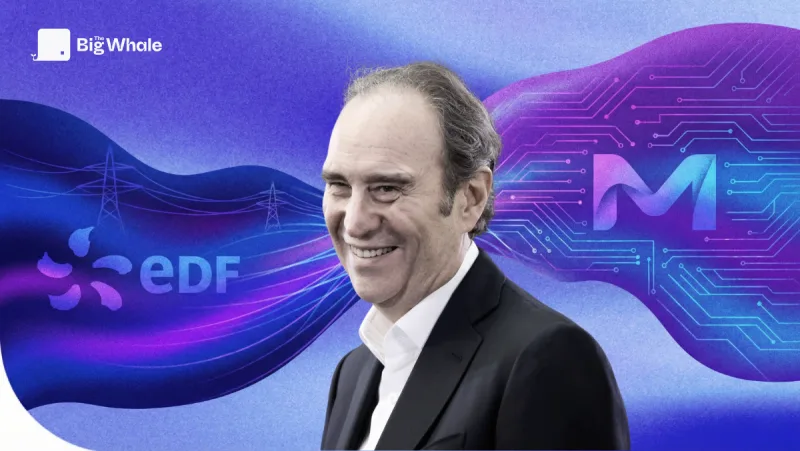
The Exaion case is about to take a decisive turn. According to our information, Xavier Niel has been discreetly mandated by the Élysée to enter the capital of the current EDF subsidiary as part of its takeover by the American Bitcoin mining giant, Mara (formerly Marathon Digital Holdings).
The objective is clear: to "Frenchise" the operation through a minority stake by the founder of Free, in order to cut short criticism of the loss of sovereignty of a technology subsidiary that has come out of the EDF fold.
Several political groupings, from Rassemblement national to La France insoumise, via Nouvelle Énergie (David Lisnard), Reconquête (Éric Zemmour) and Union des droites pour la République (Éric Ciotti), have vigorously opposed the project.
Also according to our information, Xavier Niel flew to the United States at the very beginning of February to meet Fred Thiel, Mara's CEO, to discuss the terms of this alliance.
Contacted by The Big Whale, the businessman did not wish to comment.
A business of flexibility
While this move is political, it is also eminently strategic for Xavier Niel. The new Exaion entity will inherit a unique competitive advantage: privileged access to EDF's production flexibility tools.
In a fast-changing energy market, Exaion's ability to adapt its level of consumption (mainly via Bitcoin mining) to absorb electricity surpluses is becoming a goldmine.
This deal comes at a time when France is shifting into a new energy paradigm.
The Programmation pluriannuelle de l'énergie (PPE 3), a strategic document setting out the country's energy roadmap until 2035, envisages a massive acceleration in production, while the country is already facing a situation of chronic overcapacity (130 TWh annually).
The cry of alarm over nuclear "modulation"
Several recent reports highlight the urgent need to find outlets for this surplus electricity.
Despite some of it being exported abroad, the finding is stark: EDF is forced to modulate its nuclear fleet to ensure a balance between supply and demand on the grid.
In its report of September 2025, the Commission de régulation de l'énergie (CRE) states that modulation for "lack of economic outlets" has become the norm.
And this forced flexibility is taking a heavy toll on the national industrial tool.
The Cour des comptes, in a note dated 17 November 2025, pointed out that production losses linked to this modulation have represented an average of 7% of annual "produtible" since 2016.
In 2024, modulation even doubled compared with the average for the previous decade.
So many figures that have prompted EDF boss Bernard Fontana to express "growing concern" in a letter to Pierre Moscovici, the first president of the Court of Auditors.
And internally, it's creaking in the ranks of the energy giant...
A confidential EDF report (revealed by numerous media outlets, including L'Express, which claim that its publication was hushed up) points to the impact of variations in nuclear reactor power on the infrastructure.
It states that the constant variations in nuclear power plants lead to thermal and mechanical fatigue.
A bit like when a car runs on under-rev.
The result: increased maintenance requirements and, probably according to EDF experts, the premature replacement of certain components (turbines, alternators, pumps, valves, etc.).
This analysis is also shared by a parliamentary report published in November 2025 on behalf of the Parliamentary Office for the Evaluation of Scientific and Technological Choices.
Bitcoin mining as an adjustment variable
This is where Mara's takeover of Exaion makes sense: Bitcoin mining would come into play here as a grid-stabilising infrastructure.
This comes against the backdrop of RTE, the grid operator, calling in its balan prévisionnel de décembre 2025 to the creation of new consumption outlets.
Bitcoin mining is the only energy-intensive industry capable of absorbing gigawatts of surplus in real time and wiping itself out in a matter of seconds as soon as the grid becomes strained.
For Mara, access to France's nuclear fleet is a historic opportunity to secure low-carbon energy at a competitive price.
For the French government, this partnership with a world leader means it can delegate the management of this flexible load.
It now remains to define Xavier Niel's real weight in the capital after this transaction, particularly because Mara plans to buy back 64% of the shares...
And Mara remains an American player.
The question of sovereignty over a project that is both technological and energy seems difficult to reconcile with the new line defended by Emmanuel Macron since the Davos forum.
Even more so as European alternatives exist.
>> Exaion-Mara: why the sale framework threatens European sovereignty